
Home / Expeditions
8,000 m · 7,000 m · 6,000 m · Big walls
Expeditions in the Karakoram and Himalaya
Five of the world’s fourteen 8,000-metre peaks and some of the finest 6,000 and 7,000-metre objectives on Earth. Explore the peaks we support.
- 8,000 m peaksFive in Pakistan
- HighestK2, 8,611 m
- SeasonJune to August
- GatewaysSkardu and Gilgit
- SupportFull or base camp only
The giants
Pakistan’s 8,000-Metre Peaks
Four of them rise around the Baltoro Glacier. Nanga Parbat stands alone at the western end of the Himalaya.
Heights are commonly published figures.
8,000-metre peaks
The Eight-Thousanders
Expeditions to these peaks usually take seven to nine weeks and require extensive high-altitude experience.
| Peak | Height | Region | Approach | Notes |
|---|---|---|---|---|
| K2 | 8,611 m | Baltoro Muztagh, Karakoram | Baltoro and Godwin-Austen glaciers | The second-highest mountain on Earth and one of the most demanding to climb. |
| Nanga Parbat | 8,126 m | Western Himalaya, Diamer and Astore | Diamir Valley (standard route) | The ninth-highest mountain, with the vast Rupal Face on its southern side. |
| Gasherbrum I | 8,080 m | Gasherbrum massif, Baltoro | Baltoro and Abruzzi glaciers | Also known as Hidden Peak, shared base camp with Gasherbrum II. |
| Broad Peak | 8,051 m | Baltoro Muztagh, Karakoram | Godwin-Austen Glacier | K2’s neighbour, with a long summit ridge above Concordia. |
| Gasherbrum II | 8,035 m | Gasherbrum massif, Baltoro | Baltoro and Abruzzi glaciers | Often considered one of the more approachable 8,000-metre peaks. |
7,000 and 6,000-metre peaks
Building Experience at Altitude
Excellent objectives in their own right, and the natural stepping stones towards an 8,000-metre expedition.
| Peak | Height | Region | Notes |
|---|---|---|---|
| Gasherbrum IV | 7,925 m | Gasherbrum massif, Baltoro | A serious technical peak, famous for its Shining Wall. |
| Rakaposhi | 7,788 m | Nagar Valley, Karakoram | A huge, steep mountain above the Hunza and Nagar valleys. |
| Muztagh Tower | 7,276 m | Baltoro Muztagh, Karakoram | A formidable granite tower for experienced alpinists. |
| Diran | 7,266 m | Nagar and Bagrot valleys | A snowy pyramid often climbed from the Minapin side. |
| Spantik | 7,027 m | Spantik-Sosbun Mountains, Nagar | Often chosen as a first 7,000-metre peak, reached from Arandu. |
| Pastore Peak | 6,209 m | Near Concordia, Baltoro Glacier | A good first 6,000-metre peak for teams already on the Baltoro. |
| Laila Peak | 6,096 m | Hushe Valley, Ghanche | A striking spear of snow with a steep, sustained summit slope. |
Not every peak is offered every season. Ask us about other 6,000-metre peaks suited to your experience.
Big-wall and alpine rock
Granite Playgrounds of Baltistan
Towers and walls that draw rock climbers from around the world.

6,286 m
Trango Towers
Some of the tallest rock walls on Earth, rising above the Baltoro Glacier.

Hushe Valley
Charakusa Valley
Granite spires and alpine routes at the head of the Hushe Valley.
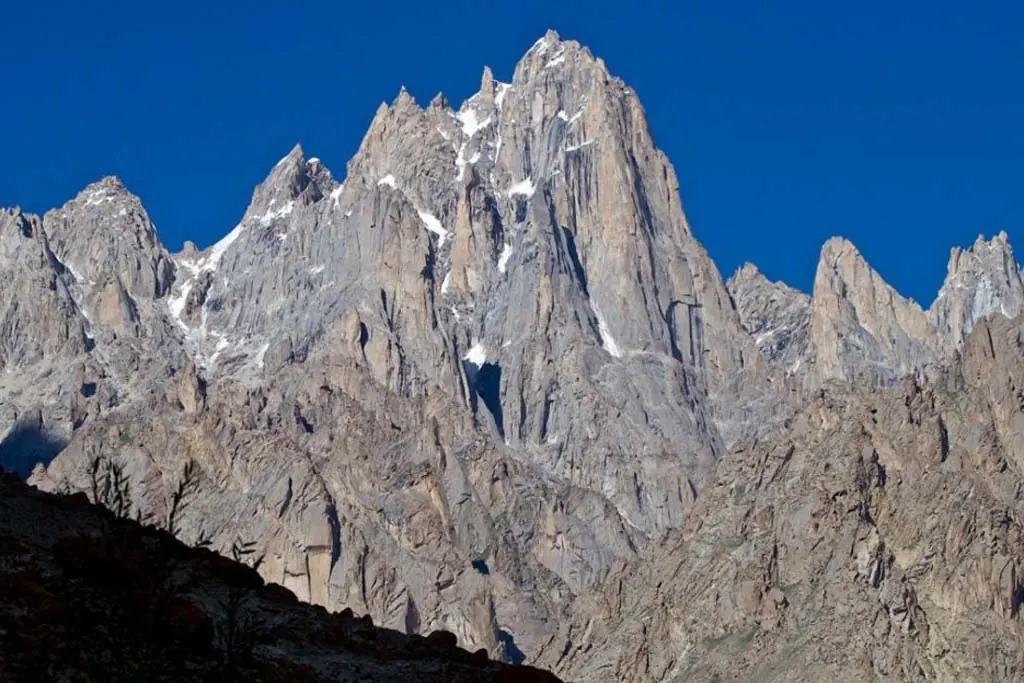
Ghanche District
Kondus Valley
Remote granite towers with huge potential for new routes.
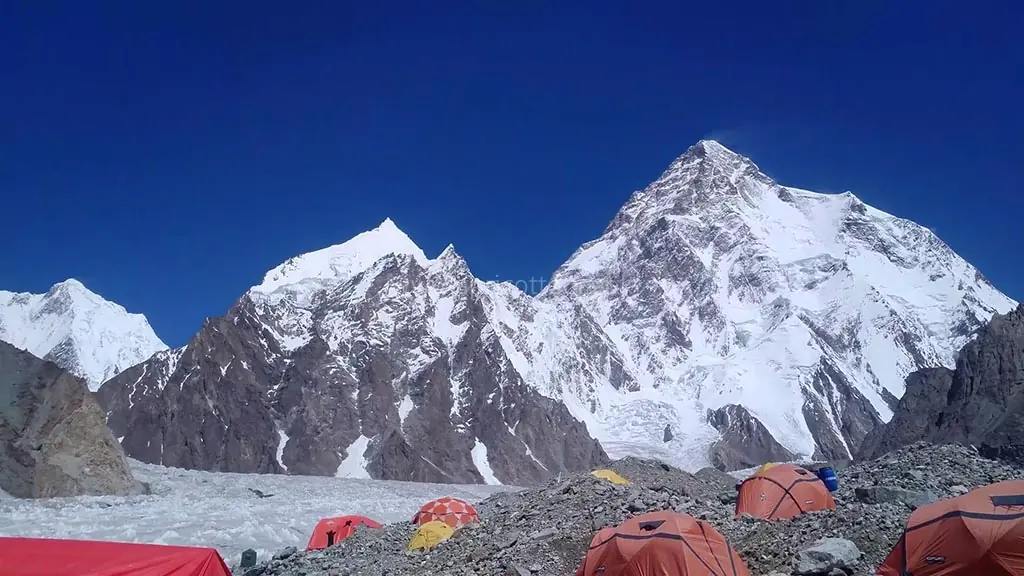
Expedition base camp in the Karakoram.
Expedition support
Logistics From Permit to Summit Push
Whatever your objective, we can handle permits, travel, the approach trek, base camp services and high-altitude support, or only the parts your team needs.
- Peak permits and liaison arrangements
- Cargo, porters and the approach trek
- Base camp kitchen, cook and tents
- High-altitude porters where required
Choose Your Mountain
Tell us your objective, team size and experience, and we will reply with options, timings and a logistics plan.
FAQ
Expedition FAQs
Still deciding? These are the questions travelers ask us most.
How many 8,000-metre peaks are in Pakistan?
Five: K2, Nanga Parbat, Gasherbrum I, Broad Peak and Gasherbrum II. All are in Gilgit-Baltistan.
Which peak should I climb first?
Climbers new to high altitude usually start with a 6,000-metre peak such as Laila Peak, then move to a 7,000-metre peak such as Spantik before attempting an 8,000-metre expedition.
When is the expedition season?
June to August for most peaks in the Karakoram, with summit pushes typically in July and early August.
How long does an expedition take?
Around three to four weeks for a 6,000-metre peak, five to six weeks for a 7,000-metre peak and seven to nine weeks for an 8,000-metre peak.
Plan your expedition
Tell Us About Your Objective
Share the peak you have in mind, your dates, team size and climbing experience. We will reply with options and the next steps. Sending this form is an inquiry, not a confirmed booking.
- Send your inquiryDates, group size and anything we should know.
- Get a tailored planWe reply by email with an outline itinerary and an itemised quote.
- Confirm and prepareOnce you are happy, we confirm arrangements and send a preparation guide.